
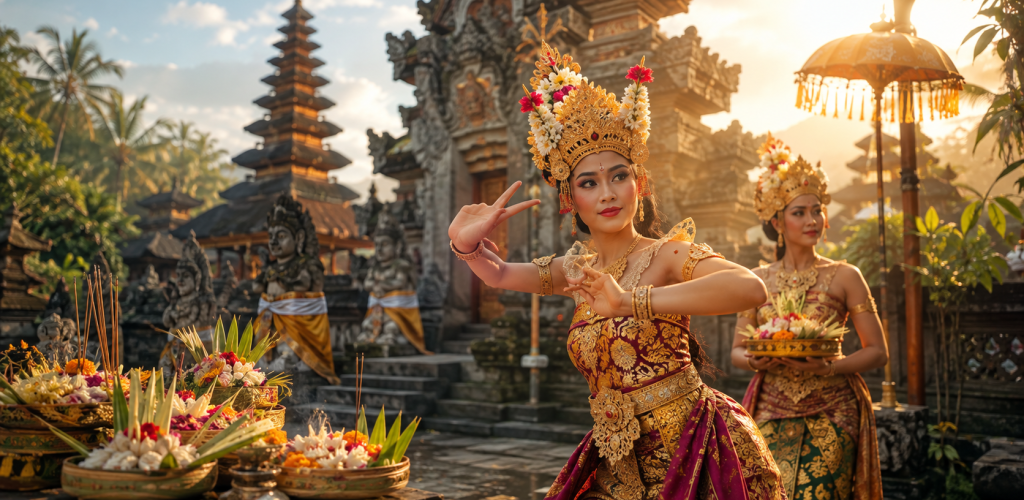
Bali is not only famous for its beautiful beaches, tropical landscapes, and luxury resorts. The island is also home to a rich and deeply rooted culture that continues to shape the daily lives of its people. From religious ceremonies and traditional dances to temples, art, and community traditions, Balinese culture offers visitors a meaningful glimpse into the island’s unique identity.
A Strong Connection to Spirituality
Spirituality plays an important role in Balinese life. Throughout the island, visitors can find temples, shrines, and daily offerings placed in homes, shops, streets, and public areas. These small offerings, known as canang sari, are commonly made from woven palm leaves, flowers, rice, and incense.
For many Balinese people, these offerings are a way to express gratitude and maintain harmony between humans, nature, and the spiritual world. This philosophy is closely connected to Tri Hita Karana, a traditional Balinese concept that encourages balance between people, the environment, and God.
Traditional Ceremonies
Bali is known for its many religious and traditional ceremonies. Throughout the year, communities gather to celebrate important occasions such as Galungan, Kuningan, temple anniversaries, weddings, and cremation ceremonies.
One of the most significant ceremonies in Bali is Ngaben, the traditional Balinese cremation ceremony. It is an important part of the spiritual journey and is performed to help release the soul from the physical body.
Another unique celebration is Nyepi, also known as the Balinese Day of Silence. On this day, the entire island becomes quiet. People stay at home, businesses close, and normal activities stop for 24 hours. Nyepi is a time for reflection, meditation, and spiritual cleansing.
Balinese Temples and Architecture
Temples are an essential part of Balinese culture. Almost every village has several temples, and many families also have their own family temples at home.
Balinese temples are known for their beautiful architecture, detailed stone carvings, traditional gates, and multi-tiered shrines. Famous temples such as Besakih Temple, Tanah Lot, Uluwatu Temple, and Tirta Empul attract visitors from around the world.
However, temples are not simply tourist attractions. They remain active places of worship, so visitors are expected to dress respectfully and follow local customs when entering temple areas.
Traditional Dance and Music
Traditional dance is another important part of Balinese culture. Each dance tells a story and often represents religious beliefs, mythology, or historical events.
Popular Balinese dances include the Barong Dance, Legong Dance, and Kecak Dance. These performances are often accompanied by traditional gamelan music, which features instruments such as gongs, metallophones, drums, and cymbals.
The combination of music, movement, costumes, and storytelling creates a powerful cultural experience that reflects the artistic spirit of Bali.
Art and Craftsmanship
Bali has a long tradition of art and craftsmanship. Many villages specialize in particular forms of art, including painting, wood carving, silver jewelry, stone carving, and traditional textiles.
Ubud is especially well known as a center for Balinese art and creativity. Meanwhile, villages such as Celuk are famous for silverwork, Mas for wood carving, and Batubulan for stone carving.
These traditions are often passed from one generation to the next, allowing traditional techniques and artistic styles to remain an important part of modern Balinese life.
Community and Togetherness
Community is at the heart of Balinese society. Traditional village organizations, known as banjar, play an important role in organizing ceremonies, social activities, and community events.
Members of the community often work together to prepare religious celebrations, maintain public areas, and support one another during important life events. This strong sense of cooperation can be seen throughout Bali and is one of the reasons the island maintains such a distinctive cultural identity.
Respecting Balinese Culture
Visitors to Bali are encouraged to enjoy the island’s traditions while also respecting local customs. Simple actions such as wearing appropriate clothing when visiting temples, avoiding disruption during ceremonies, and respecting sacred areas can make a positive difference.
Learning a little about Balinese traditions before visiting can also help travelers understand that Bali is much more than a holiday destination. It is a living cultural landscape where ancient traditions continue to exist alongside modern life.
Discover the Cultural Heart of Bali
Exploring Balinese culture can make a trip to the island even more meaningful. Beyond the beaches and tourist attractions, Bali offers centuries of tradition, spirituality, art, and community life.
Whether you are watching a traditional dance, visiting a temple, seeing a local ceremony, or simply observing daily offerings along the street, every experience provides an opportunity to discover the true spirit of Bali.
For travelers who take the time to understand and respect these traditions, Bali becomes more than a beautiful destination. It becomes a place filled with stories, meaning, and unforgettable cultural experiences.